Showing posts with label Season 22. Show all posts

Tuesday, 2 September 2025

What's Wrong With... Revelation of the Daleks


It is a truth, universally acknowledged, that some writers on long-running TV series much prefer their own original characters to the regulars, who they feel they can't really do a lot with. 
This is certainly the impression that Eric Saward seems to be giving during Season 22. We've already noted how the Doctor and Peri seem to take a very long time getting into the main plot - usually being left to argue in the TARDIS for much of the first episode.
In Revelation of the Daleks, the Doctor and Peri spend the entire first instalment walking towards the plot. And even then the Doctor gets held up outside Tranquil Repose at the cliffhanger, not even managing to get through the doors to where Davros is getting on with the plot. He doesn't even glimpse a Dalek. That's left for Peri to do, but she doesn't recognise it. Maybe the Doctor should have warned her about them, instead of showing her pictures of his old companions like Jo Grant.
We've spent most of the first 45 minutes in Davros' company, and meeting all the other grotesque characters who populate this story.
For a Dalek story, they don't feature very much in this - only really coming into their own in the last 10 minutes once the Imperial faction turn up.

We're told that Tranquil Repose is a fairly exclusive funerary complex, reserved for the rich and famous. Many of the bodies are being used by Davros to create his new Dalek army. So how can it be providing enough of Kara's foodstuff to alleviate famine in this corner of the galaxy?
Davros points out that the heirs to the people entombed there are hardly likely to ever want them back, so why hasn't everyone cottoned onto this? Surely the king of a planet, or the CEO of some big conglomerate, must know that the person taking over isn't going to do anything to haste them back in charge again, now that they're in control.
If the weed-plant is regarded as just that - a weed - why is it used to decorate the funerals of royalty? Isn't that a bit of an insult?
Peri states that the weed-plant is the only thing which grows on Necros, despite her and the Doctor walking through a forest at the time...
Can eating a sandwich ever really make a humanoid explode?

Davros is using a dummy head in a glass case to decoy potential assassins. Yet he seems to be able to see, hear and speak with it, and even fire electrical charges from it. He has controls in front of him and sits watching what's going on on a big screen. He's posing as the Great Healer, and is obviously afraid of assassination (or arrest as a war criminal and prison escapee). So why, if he's going to create a fake persona, did he make it look like Davros, the well-known war criminal and prison escapee? He could have had a fake head that looked like the Doctor, just to discredit him - or just for a laugh.
What's real Davros doing all this time anyway, and how does he communicate with his fake self?
Why hide away even when there's no-one but the odd Dalek in his control room? He also appears to have human guards. Why use them, instead of sticking with his new ultra-loyal Daleks to preserve his life?
(The idea of using a decoy is also far from original - having only just been seen in the previous story).
And talking of dummies, why replace Stengos' body with a fake? Just how often do relatives come looking to see their dear departed, and if it happens a lot then wouldn't much better fakes be best?
Why are Natasha and Grigory allowed to get so far into the complex - and what exactly are they homing in on? It can't be Stengos' body, as we know its been replaced with the dummy one.

As with the previous Davros story, he seems to have gathered an awful lot of information considering that he's been in hiding since being broken out of prison. How did he know what the Doctor looked like nowadays, to set up the fake tombstone? Why not just drop a real tombstone on the Doctor, instead of messing about with polystyrene ones?
The Doctor has defeated him three times already, so isn't he running a massive risk deliberately inviting him here to his latest base of operations.
When the real Davros finally shows up, we can see he is badly superimposed over Orcini's prostrate form - his leg waving about behind Davros' chair even though he's floating several feet away.
How do two lowly funeral technicians know so much about Davros and the Daleks, to the point that they can even contact Skaro and invite them over? So much for Davros' elaborate security measures.
What's the point of the glass incubator Dalek? Can't they just deposit the conditioned mutant directly into a Dalek shell?
When I reviewed this story, I said that it was the best of the Colin Baker era - but it wasn't the best Colin Baker story. That was because the Doctor hardly does anything until the final confrontation between Davros / Kara / Orcini. It's the Daleks who stop Davros, and Orcini who blows up the complex.
The Doctor need hardly have turned up at all...

Tuesday, 19 August 2025

What's Wrong With... Timelash


Now there's a question...
It's another one of those where it might be quicker and less painful to look at what went right - but here we go.
It should be noted from the outset that writer Glen McCoy can't be held solely responsible for this story. He was an ambulance driver at the time who had submitted scripts for medical soap Angels, so his experience was limited, to say the least, and his original submission had been a Dalek story built around HG Wells' The Time Machine - not realising that Terry Nation had already delivered that back in 1963.
As a new writer, script editor Eric Saward claimed to have had a lot of input into Timelash, so needs to share some of the criticism.
And let's not forget JNT, who took the regulars out of rehearsals (and it shows) for his latest tacky pantomime. Oh yes he did...

A problem with this season generally is the long delay in the Doctor actually getting into the plot. This one is particularly badly structured, with the whole "seat belts in the TARDIS" scene coming across as unnecessarily padded. It's a problem with the 45 minute episodes - prolonging the big cliffhanger rather than just using what would have been the end of Part Two of a traditional four-parter.
When has the Doctor ever resorted to those belts, considering the number of times the TARDIS has been out of control?
Part One actually overran, whilst Part Two underran, so another problem with pacing and structure.
That whole argument between the Doctor and Peri before he goes off to stop the Bandril missile had to be filmed during the making of the next story and edited in.

Everyone dreads the Timelash (presumably because they don't know where it takes you and think it might be an airless moon or some such), but it goes to a rather attractive part of Scotland. Okay, so the earlier history of my homeland was a dangerous place (still is not a million miles from where I write this), but a bunch of people turning up with advanced technological knowledge, assuming they escaped being burnt as witches, could easily have come to dominate the area - especially as the established ones would have welcomed the newcomers. Maybe this is why we came to be at the forefront of the Enlightenment and to invent a heck of a lot of stuff - it's all down to descendants of refugees from Karfel.
The Borad is simply creating a potential power base elsewhere in the galaxy that might then come to invade and dominate Karfel in revenge.
The idea that the Borad is the Loch Ness Monster is obviously nonsense, as he's just a human sized guy with a flipper, whereas we all know it's the Skarasen, established in the loch well before the period mentioned here.

The whole Bandril conflict revolves around Karfel being the bread basket for that world, yet the model shots of the citadel appear to show it sitting on a rocky, barren, moon-like landscape. Shouldn't it be corn-fields, under a blue sky? VFX don't appear to have examined the script too closely.
The Bandrils aren't given anything to contrast their size with, making them look even more like glove puppets than they needed to be. Are they small, or are they twenty feet high? There's no sense of scale.
The Bandril response to having their wheat withheld? To destroy the planet they rely on to provide them with wheat...

The Borad is said to have lots of experiments going on, yet all we see is the Timelash - already up and running for some time, and his private plans to create a Morlox-hybrid mate for himself. If he's that great a scientist, why hasn't he built sufficient power generation capacity for himself - then he wouldn't need to divert energy from hospitals etc and stir up rebellion.
The story opens with one rebel being brought to his inner sanctum to be aged to death, whereas her comrade goes into the Timelash. What's so special about her (apart from providing a pre-titles style hook for the story)? Presumably this is something personal between him and her, but it's not clear on screen.
Why would anyone leave acid-spitting plants sitting around in a communal area? The guards wear netting on their faces, but we know this is no defence as we see Peri shove a plant into one of their faces.

Part Two has additional padding as the Borad turns out to have a clone. This one walks about, whilst the original is confined to a wheelchair. Or does it? Which one is the clone, and which the original? Presumably the one in the wheelchair is the original, else why would you make a disabled clone of yourself? What was the clone doing all that time?
If the Borad has mastered cloning, why the whole convoluted "let's-deliberately-start-a-war-so-that-a-stockpile-of-gas-will-be-released-that-will-turn-the-survivors-into-Morlox / Karfelon-hybrids" scheme? Has he been taking lessons from the Cybermen. or watching recent series finales?
He was created in a freak accident, so who is to say that repeating the process would result in anything similar. You might just get people with really long necks.
Why suddenly get the hots for Peri (not as if she hasn't had this sort of thing happen before) over any other female? What was wrong with all the Karfelon ladies? They're beautiful women, probably, so why not just mate with one of them? 
If the Borad is never seen in person in public, why the fake old man? Couldn't he just do his dictating as a voice and picture, like Big Brother?

The Borad's actions are a little inconsistent. He prizes the Timelash yet doesn't properly protect it - allowing the rebels to seize the council chamber very easily, and leaving a Time Lord with access to its innards - the set for which has to be one of the worst ever seen in the series. Jablite, tinsel and disco lights.
(The lack of reflective surfaces might be part of the plot - but it also makes from drab sets).
The Borad also kills Renis for actually refusing to agree to rebel with young Mykros, yet does nothing when Tekker allows Vena to nab the vital power control amulet. (And why trust such an important item to a transient politician anyway, especially when they seem to be so expendable?).
Lucky someone with a TARDIS showed up a few minutes later to get it back...

As for the rebels, Peri gets handed a cryptic note - rather than something which actually spelled out who it was for and why. The person who handed it to her seems to know all about the new arrivals and that they might be useful allies - but doesn't appear to have then told his leader to expect them, so Peri gets captured and threatened by the person who actually wants her help.
Recognising a photograph of Jo Grant magically makes everyone trust her. I can understand Katz keeping the locket as a memento of her grandfather, but would she really recall all the additional information about the woman in the picture.? And how does Peri recognise Jo anyway? Has the Doctor spent long nights in the TARDIS boring her with his holiday snaps, when they aren't arguing with each other?
Tekker seems to think that the Doctor normally has two companions, and it is the Pertwee Doctor he's talking about - but that incarnation never travelled with more than one person.
The Pertwee portrait is hidden behind a panel, and behind it lies a mirror. Why did the Borad not simply remove and destroy these items, and avoid the risk of their rediscovery? How did the Doctor know that they were there? Did he hang around to see his picture before departing last time (possible, for this most vain of Doctors).

McCoy might have managed to cram in the big three HG Wells novels - War of the Worlds, The Time Machine and The Invisible Man - but he doesn't seem to have done much research into the man himself.
He preferred George to Herbert and was short and blond. He certainly didn't get all embarrassed around the ladies like Herbert here...
Last, but by no means least: is Timelash the only Doctor Who story to have a title which is also an anagram of its description...?

Tuesday, 5 August 2025

What's Wrong With... The Two Doctors


If there's one thing that Robert Holmes disliked, it was being forced to adapt to the "shopping list" of story elements imposed by the producer / script editor. He struggled when asked to include the biggest monster ever seen in the show in The Power of Kroll, and he quickly pulled out of writing the 20th Anniversary story when he realised what JNT and Eric Saward wanted it to include - often at the last minute, as actors dropped in / out of the production.
He would later claim The Two Doctors as one of his least favourite stories. It's not just JNT's shopping list that's at fault, however - there are some narrative issues and some pretty unimaginative direction as well.
First of all, the shopping list. When called upon to provide the 20th Anniversary story, this had proven too much for Holmes and so he pulled out. What he would have given us, ironically, is partly what we see here. His 20th Anniversary story - "The Six Doctors" - would have seen the Cybermen trying to identify the genetic imprint which allowed safe time travel, and they would have kidnapped the First Doctor and replaced him with a robot double - hence the title and also to explain the change in actor's features.

Never one to let a good idea go to waste, Holmes uses the basic premise again here, but he had already been asked to come up with a multi-Doctor story, featuring an old companion of the earlier Doctor, and set overseas - originally New Orleans. It also had to be the equivalent of an old six-parter - a length he never liked.
With the setting handed to him, Holmes could only think of jazz music and cuisine as emblematic of the city and so opted for the latter - devising a race of aliens named Androgums, which was an anagram of gourmands.
When it became clear that Louisiana was way out of his budget, JNT decided on somewhere closer to home where he'd like a nice free holiday and Spain was chosen - the city of Seville to be exact. It has a lot of fine eateries, but is hardly best known for this, so Holmes found his new aliens quite redundant - but still had to fit them in.

Preferring his own new creations, another item on the shopping list was the return of the Sontarans, which he was not happy about out, even though it was he who had created them in the first place.
They are very poorly used here, so you can tell he begrudged including them. He is clearly far more interested in Chessene and Shockeye.
The manner in which the Sontarans are introduced is terrible - in a long shot, with no big iconic reveal despite their popularity and lengthy absence from the show.
The new masks look plasticky, the heads don't fit properly at the neck, and we have the problem of the obvious height disparity between Stike and Varl. Sontarans are supposed to be a clone species (even though no two consecutive previous stories had shown us identical specimens).

Attending far too many conventions, sometimes to the neglect of the programme itself, JNT had formed the silly idea that the Doctor actors never behaved themselves when they got put together, which is why he split them up for The Five Doctors until the very last sequence, and a single day in studio. The story was criticised for this, but JNT never learned - probably too busy thinking of the stage antics between Troughton and Pertwee at those events.
Here, we get very few scenes involving the two Doctors together, which is a real shame. Troughton gets shunted off into his own plot, whilst Baker takes an age to get to him.
Fans want to see the different incarnations interact - something which the new series does a lot better.

Holmes once again gets round the six-parter problem by having two of the episodes (or equivalent) in a different setting.
Here we get the opening episode set primarily on the space station.
The Time Lords once again this series aren't the only ones who can travel in time (all those other customers for Zeiton 7 ore). At least here we see them doing something about it - challenging Dastari's work.
This, however, leads us into one of the story's biggest issues. Just when does this take place in the time-stream of the Second Doctor and Jamie?
At no point could the Second Doctor control the TARDIS, and he was on the run from the Time Lords, clearly never having interacted with them since he ran away from Gallifrey.
But here we are expected to believe that he is carrying out jobs for them, and they have given him a remote control device. The TARDIS can go exactly where planned to go.
Troughton and Hines look a lot older than they did in The War Games, which can't be helped, but the story seems to be set at a time when the Doctor and Jamie are travelling with Victoria, and have been able to drop her off somewhere to do a course, fully expectant of successfully collecting her again.
All this smacks of what is known as "Season 6b", which Terrance Dicks was favourable towards as he set novels in the period. It is posited that after his trial he was not immediately despatched to Earth with a new face, but instead was used by the Time Lords for a period to carry out missions on their behalf. To help him in these, he was given Jamie and Victoria back as companions (though you would have expected it to have been Zoe - unless she declined the offer this time).
The other option is that the Doctor has been taken out of his timestream at a much later date, long after his capture - but this doesn't explain why they didn't use the Third incarnation, who they had working for them already anyway, or the Fourth, who also carried out some work for them.

Another obvious thing to say about this episode is the amount / nature of violence - something only to be expected from Holmes, especially if he has included "cannibalistic" aliens. The Doctor once again comes across badly as he indulges in humorous quips about the deaths of sentient beings.
The murder of Oscar is unnecessarily brutal - stabbed in the guts - especially after he has been set up as a funny, gentle man. 
We also have torture and the murder of an old woman, whose corpse is apparently eaten.
It's claimed that the old woman was reclusive - yet Shockeye somehow manages to learn all about the fancy eating places from her mind.
Chessene talks of killing "the other Time Lord" - despite never having met the Sixth Doctor at this point or having any way of knowing that he is a Time Lord.
Dastari balks at the thought of killing a Time Lord, due to the repercussions - after just spending two and half episodes planning to do just that to the Second Doctor...
And how exactly do you study someone chromosome by chromosome using a surgical saw? Just a few cell samples would have sufficed, surely.
How could the Doctor have been affected by the death of the Second if it never happened? It was just a holographic projection, so he should never have experienced anything.
If you want peace and quiet to carry out a sensitive medical procedure, why go anywhere even remotely close to a city on Earth that's popular with tourists. A lab set up on an uninhabited planet or moon would have made sense, but this is just daft. (Apparently Earth was selected to please Shockeye, but why would the wishes of a mere servant come under consideration for such an important mission?).

Why does Stike order their commodious and well-equipped spaceship to be self-destructed, when they're only going to be left with a tiny time capsule that they don't even know works properly yet? If they still draw their energy through their probic vent then they've just blown up their only lifeforce source.
Bottom line: with this set of ingredients it ought to have been a classic - Sontarans, the return of the Second Doctor and Jamie, an exotic foreign location... but it doesn't work, and even its author disliked it.

Tuesday, 15 July 2025

What's Wrong With... The Mark of the Rani


Too many Time Lords, that's one of the things.... Instead of getting her own introductory story all to herself, the Master gets shoehorned into what is really a very simple and straightforward plot by the Rani. She's out to harvest chemicals from the human brain which will pacify the people of the planet she has taken over. She has tampered with their neural chemistry so that they need to sleep less, and so can work more. This has led to them becoming overly stimulated physically and emotionally, however. 
She picks times of great upheaval so that no-one will notice that her victims are acting very aggressively.
In this instance she picks the period of English history known as the Luddite Riots - and there we have a couple of problems.

The first is that there were lots of nice big wars going on around this time - the biggest being the Napoleonic Wars but there were dozens of other conflicts all across the globe in the first quarter of the 19th Century to pick from.
Secondly, the Luddite Riots were primarily aimed at the manufacturing industries, especially cotton - a violent reaction by some workers to the threat to their jobs from automation. They occurred roughly between 1811 - 1816. Killingworth is very much a coal mining district, producing the key raw material needed to fuel the mill towns such as "Cottonopolis" - Manchester. There's no evidence of any manufacturing going on here. Automation had very little impact on jobs in the mining industry, which is why it remained labour intensive up to its decline.
The riots had peaked by 1813, and George Stephenson did not produce his first locomotive until the following year. (We see what looks like The Rocket, but that was actually built by his son Robert in 1829).
If the Rani needs brain chemicals to subdue an entire planet's population, surely it will take her decades to harvest enough fluid using the occasional customer of a village bath-house.
Going undercover at a hospital in a war zone would have been far more efficient for her needs.

We first see the Master standing in a field disguised as a scarecrow. Why? 
Did he somehow know that the Doctor's TARDIS was going to arrive there in the next few minutes, or has he been hanging around there for hours (or days / weeks) on the off-chance his arch enemy might show up?
Even if we allow for the fact that he deliberately caused the TARDIS to go off course, how did he know that the Doctor was heading for somewhere in this general time zone anyway?
(Kew Gardens did not open to the general public until 1840 by the way, well after the events depicted here).
What, exactly, is the Master's plan here anyway? It appears to be another attempt to meddle in Earth history by interfering with the Industrial Revolution which, considering it has been going on for a while by this stage, is surely "small time villainy" once again on his part.
How exactly does he intend to interfere, if he only finds out about the Rani's mind-controlling maggots after he has already come here? Was he going to hypnotise all the visitors to Ravensworth's conference individually? Was his plan to assassinate them? If so, then just about all their inventions would have been developed by their rivals / relatives / assistants anyway, sooner or later.

Back to disguises: no-one knows the Rani here, so why does she feel the need to wear a mask to run the bathhouse?
And is the Doctor putting some dirt on his face really enough to confuse the Rani? She's seen him enter the village on the back of a cart only a short time ago, but doesn't recognise it's him in the bathhouse until she's about to drain off his brain fluid.
It's a small place so she ought to spot strangers straight away, and this guy has just gone right past her holding a loudly bleeping electronic device.

When the volcano trap ignites, why do they not simply run out of the door? We know it's not locked because he opens it to let the gas out.
In the same way we questioned why a Time Lord would pause to name the type of weapon that's about to shoot him dead, instead of running away or punching his attacker, why does the Doctor feel the need to reel off the multi-syllable name of the chemical that is about to poison him and his companion?
It's mustard gas (which would have been quicker to say if he really does insist on Peri knowing what's about to kill her), so donning gas masks wouldn't stop them getting blistered skin.
And why does this basic gas trap need a TARDIS to power it?

There's some dreadful dialogue as well, such as the Rani's "You and the Doctor are a well matched pair of pests". One's a mass murderer and the other stands for everything which she doesn't, yet she can only describe them as "pests".
The Bakers are infamous for using ten words, the more elaborate the better, where simpler, more straightforward, language would do - e.g. "Fortuitous would be a more apposite epithet". It's all very well helping the kids expand their vocabulary, though I don't know how many went into school the next week saying this instead of "'Lucky' would be a better word".
At one point Peri says "You suspect another motive?". When does she ever speak like this? She would say "You think (s)he's up to something?".

Why does the Master think that shoving the Doctor's TARDIS down a pit will destroy it?
How can a Time Lord be fooled into thinking that the Rani has invented a scanner that can somehow show thoughts instead of real images when any old TARDIS has this function built-in anyway - like when the Doctor used such a device to show Zoe a summer repeat of The Evil of the Daleks?
Even the moronic Moroks had tech that could do this.
Why does the Master use one of the scarce maggots to hypnotise Luke, when he could just have done this himself and saved the beastie for another time? 
Why does Peri have to set out and concoct a herbal remedy? Does Killingworth not have any doctors?

We can't put it off any longer, but the plastic tree needs to be talked about. It's one of the worst effects in the history of the series. The pair which hold the Doctor up are just as bad. Note how the rope tying him has modern sticky tape on it and plastic tips.
The Rani emerges from her ship with only a couple of mines, yet later the dell is supposed to be littered with them. (And does the Doctor go back and deactivate them all after? Doesn't look like it).
Still, could be a lot worse. They could have had the Rani breathing on people and turning them into plants. That would have been really stupid...

Tuesday, 24 June 2025

What's Wrong With... Vengeance on Varos


It's a problem throughout Season 22, in that the Doctor takes ages to get into the action. We get interminable TARDIS scenes, usually with the Doctor bickering with Peri and / or - as here - treating her shabbily. In this story, the Doctor simply gives up trying to resolve the TARDIS technical issue, hardly putting up any sort of fight - something we would never see with any other incarnation. He's happy to sit on his backside, with little thought to how his companion might be dealing with being stranded in space and time. Hardly conducive to helping the audience relate to the Sixth Doctor and come to like him.
The reason for their predicament is a stupid one anyway. Why would the Time Lords come to rely on a mineral supposedly only to be found on a politically unstable prison planet? They're Time Lords, so wouldn't be confined to this particular era of Varos' history anyway.
There's also the small matter of a big button he can press to call upon the Time Lords for assistance. He still thinks he's Lord President at this point, so - even if it might wound his not inconsiderable pride to call for help - he could simply call out the equivalent of a Gallifreyan pick-up truck.

The TARDIS does finally get to Varos, and the first thing the Doctor does is interfere with what is happening to Jondar. Now we know he's a heroic rebel and this is a cruel dictatorship - but the Doctor isn't to know that. Not only does he allow a potentially dangerous criminal to get free, but he arranges the laser weapon so that it kills a guard, who might very well be an entirely innocent family man going about his lawful duties.
Besides, if the Doctor knows about Varos' importance to Time Lord technology, why is he so ignorant of its history?

Why are Galatron even bothering to negotiate the price of Zeiton ore? They're clearly a rapacious and unscrupulous corporation, willing to send in an occupying force if they don't get their way. Why pay even a small amount for the ore if they could easily invade a little backward planet like Varos and simply exploit its resources to their hearts' content?
Why is the Chief Officer content to remain on this miserable planet when he could be asking for a nice job with Galatron elsewhere? They know how ruthless he is, so I'm sure they could find a use for him.
Watching the Doctor appear to die, Bax claims there is no sign of life - when we can clearly see that he is still breathing.

The Governor seems to know about the importance of the ore, so wouldn't it be sensible if Sil and his corporation kept quiet about just how vital it is? Sil's bargaining tactics would surely give the game away that this ore is important and ought to be commanding higher prices.
Who are all these people operating time-ships anyway? Don't the Time Lords police time travel? They'll be intervening in just two stories time.
We later discover that Quillam is also in the pay of Galatron - so why is Sil only now learning about the Punishment Dome videos and his experiments? The Transmogrifier is something that could surely be exploited commercially.

We all know that the Doctor doesn't throw anyone into any acid baths, but there is still the cruel Connery-Bond wisecrack when the two men fall in - which is not very becoming of the character. Not for the first time, we have to ask whatever happened to "never cruel..."?
And finally, the writer clearly doesn't have a clue about the basic principles of supply and demand. The discovery of another source of Zeiton ore would reduce the price, as it loses its rarity value, destroys any monopoly and potentially floods the market.

Wednesday, 4 June 2025

What's Wrong With... Attack of the Cybermen


Haven't had one for a while, but it's another of those occasions when the Time Lords send the Doctor on a vital mission, but don't tell him he's on one until he works it out for himself, and they don't provide him with any information that might prove useful - like where he's going and what he has to do when he gets there.
That mission is to prevent the Cybermen messing about with future history by preventing the destruction of Mondas in December 1986, as seen in The Tenth Planet. (That's not the last old Cybermen story I'll mention, as this one is stuffed with references - many would argue to its detriment).
In order to do this, they've obviously travelled back in time to the year before this disaster. 
Except...
They haven't mastered time travel yet, and have only just stolen a time-ship which has crash-landed on Telos. How can they have a base on the dark side of the Moon, and one in the London sewers (as seen in The Invasion) in 1985, but be in contact with the Controller on Telos in 2500 or thereabouts if they don't already have significant time travel capability?
It is never quite clear if the plans of either Lytton and / or the Cybermen depend on the Doctor turning up or not. Sometimes that is suggested, and other times they simply seem to exploit his presence. But if Lytton kept his distress beacon going even after he made contact with the Cryons, who else was it intended for?
If he did know that the Doctor was sure to turn up, why put himself in danger by deliberately making contact with the Cybermen? The Doctor could have simply been made to take him to Telos in the TARDIS.
What, precisely, were the Cybermen going to do if the Doctor hadn't turned up when he did?

Why have the Cybermen chosen to change things by going to Earth anyway? Wouldn't it be simpler going to Mondas itself and warning their ancestors directly?
In The Tenth Planet, Mondas was actually destroyed by its own greed. The Cybermen claimed that they couldn't control its energy consumption, so even if the Earth was devastated by Halley's Comet, Mondas would still absorb too much energy and perish.
In this story it is stated that the planet was deliberately steered back to Earth by the Cybermen, but The Tenth Planet implied that the Cybermen didn't have much control over it, and it had simply followed a natural trajectory which had brought it back towards Earth again. The Cybermen made to attempt to move it out of danger, did they?

Here, the Controller is happy to allow a couple desperate and potentially dangerous prisoners to escape, killing several of his Cybermen, all just so he can run a psychological experiment. Wouldn't it have been better to delay this until after the saving of Mondas and foiling the Cryon plan?
The Controller also wants to destroy the surface of Telos, just to see what it looks like. Again, wouldn't it be best to make sure Mondas is safe first and not leave yourselves homeless again? But, of course, if they do save Mondas then they would never have come to Telos in the first place, so the whole experiment is pointless whichever way you look at it.
And Cybermen are supposed to be creatures reliant on logic...
The time-ship requires three to operate, yet Stratton and Bates never explain how they are going to get the third person. They don't know about Lytton and Griffiths until they come across them.
You have to wonder how Stratton and Bates could ever have been placed in control of a valuable time-ship in the first place. No wonder it crashed.
You also have to question Lytton's credentials as a criminal mastermind, if the best he can come up with include Griffiths and a police insider.

Another temporal anomaly is how the Cryons were able to establish communication with Lytton when he's in 1985 and they're also in the 26th Century. Even if they had the technology, how could they possibly know that there's a bloke in 20th Century London who is the best person to help them now, in the 26th Century?
If the technology isn't theirs but Lytton's, then where did he get it, as last time we saw him he was wandering off in a police uniform with no visible stash of electronic components. I doubt very much he'd find anything on Tottenham Cross Road that could be adapted to communicate with an alien planet 500 years into the future.
The Doctor and Lytton seem to know an awful lot about each other, considering they only glimpsed each other once across a darkened warehouse during a battle with Daleks and didn't say a single word to each other. There's nothing on screen to even hint at an unseen adventure. Indeed, the Doctor even refers to Lytton as last being in the Daleks' employ.
The Doctor also suddenly comes up with the bizarre fact that Cybermen will always respond to the distress of one of their number. Where did that come from?
If you're going to lock up a dangerous prisoner, best not to put them in a room full of highly volatile explosive material - especially if you're not going to bother searching them for any devices capable of igniting highly volatile explosive material...

Production wise, they go to all that bother to return to the ice tombs of Telos (as seen in Tomb of the Cybermen), but come up with sets that look nothing like them. They also bring back the Controller, who also looks nothing like the original - though it would be fair to say that both Controllers look like altered versions of their current subordinates, and Cybermen certainly do evolve over time. 
Needing a tall actor to play the Controller, they do the fan-pleasing thing of bringing back the original actor, Michael Kilgarriff. But he doesn't look the same, and he doesn't sound the same, and he's obviously filled out a bit in the last 18 years... That there was a character in Thomas The Tank Engine called "The Fat Controller" didn't help fans take this seriously.
In fact fans didn't like this story at all - mainly for some of the very things put in to please them. It's one thing to honour the show's history, but you have to do it in a respectful manner (no turning Sutekh into a big CGI dog, or Omega into a big CGI zombie, for instance). Above all, don't muck about with continuity, even if the series has a very poor grasp of this at the best of times. What little there is needs to be honoured. 
Certainly don't go overboard on it. One of the things people really hated about the Star Wars spin-off Solo was that they felt the compulsion to stick in an explanation / reference for every single Han Solo line in the original trilogy.
Attack of the Cybermen felt at times like a shopping list of elements from past Cyberman stories, as well as Resurrection of the Daleks obviously.

And let's not forget An Unearthly Child, because the TARDIS just happens to revisit I.M. Foreman's yard in Totters Lane. Except this looks nothing like the one we saw earlier - or the one we'll see later.
This is a scrap yard, not a junkyard. There is a difference.
Lastly, we must mention the level of violence in this story, as it will be used as an excuse to force the series into its first hiatus (I think Doctor Who fans are more familiar with this word than the general population).
There's a high body count, and we also have the nasty moment when Lytton gets his hands crushed by the Cybermen. The violence of this and other stories in Season 22 was used to justify suspending the series (though we actually know it had nothing to do with it) but a lot of fans at the time agreed that the violence was going too far.

Monday, 27 June 2022

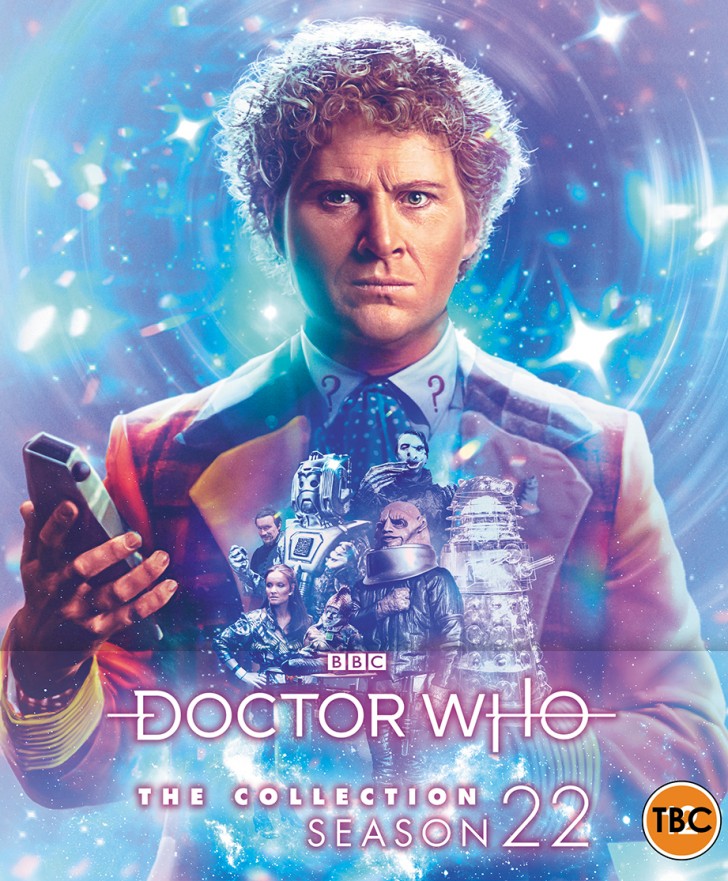
The Collection: Season 22 - A Review


The latest Blu-ray box set release is for Season 22 - Colin Baker's first (and, in some ways, only).
The stories covered are Attack of the Cybermen, Vengeance on Varos, Mark of the Rani, The Two Doctors, Timelash and Revelation of the Daleks. Two very good stories, three okay ones, and one pretty bad one.
The Cyberman story is famously bogged down by continuity, which is a shame. There is the hint of a good story here, but there are too many references to previous Cyberman stories. Even fans disliked this as they failed to honour the continuity properly. Controller and Tombs look nothing like the ones seen previously. Lots of characters get introduced whose plot goes nowhere.
Varos is the only story to have no references to previous stories, and is a far better story. Sil makes for a great villain. Mark of the Rani suffers from the Master's presence. He is simply one Time Lord too many. A lot of nice location filming. The Two Doctors is a bit of a mess. Robert Holmes was presented with too many plot elements, which don't all gel. The biggest problem is that the two Doctors don't get to spend more than about 10 minutes screen time together, and Troughton is even separated from Frazer Hines for much of it. Apparently Holmes was not happy with the previous Sontaran story, but they are woefully underused here.
Timelash is the season's turkey. This one gets new CGI effects which help a little, as this was one of its biggest embarrassment areas. The plot and acting can't be improved with CGI, however. One of its issues was that JNT took the regulars out of rehearsals for his pantomime, which he prioritised over the programme.
The Dalek story is the other very good one. It also has new CGI, dating back to the DVD release.

Apart from the Rani story, the level of on-screen violence has certainly been upped this year - which is one of the reasons given for the hiatus imposed upon the programme, announced part way through The Two Doctors. This event runs like a thread throughout the various interviews and documentaries on this set.
There are three interviews courtesy of Matthew Sweet. The first is with Colin Baker. This is an excellent piece, which only gets to Doctor Who in its final third. The rest is very much about his early life and other work, plus the events surrounding the death of his baby son. The interview with Nicola Bryant seems to get stuck on the fact that she only pretended to be an American to get the role, which Sweet just can't get over. She has more to say about JNT, especially his more controlling aspects.
The reason she did not feature in the Jim'll Fix It Sontaran skit was because she had refused to do the pantomime.
The third interview is with Michael Grade, in which he admits that there was never supposed to be a hiatus but a complete cancellation. He seemed surprised to learn that the series continued for a further four years after the suspension. He is quite unapologetic about his actions, claiming (rightly in a way) that the series was past its best, was too violent, and it was a mistake to throw licence payers money at something which just could not compete with other sci-fi TV and movies of the mid 1980's.
He certainly does not come across as the villain fans thought him to be.

As far as documentaries go, only The Two Doctors gets a new one. The others all had perfectly good ones accompanying their DVD releases. This new doc has its issues. We get a bloke in a Sontaran costume wandering around Seville - except he's just badly superimposed over some still images. There's also a really annoying deliberate image flicker prior to each interviewee being introduced, enough to trigger an epileptic fit.
One other doc associated with this story is a 2006 piece, wherein Nicola Bryant went back to Seville with some fans to visit the locations. This comes across as a very amateurish piece, and should have been better edited. It would have worked far better with Bryant presenting on her own, instead of being part of a large group. More than half the doc sees the group visit locations which didn't even feature in the story, like being forced to watch someone's holiday video.
Sticking with The Two Doctors (which does get two of the eight discs to itself) the short A Fix With Sontarans is included. This comes with a commentary (Baker, Fielding and Gareth Jenkins). The piece is edited to entirely omit Jimmy Saville, his appearance at the end being replaced with an image of Sontaran spaceships on the TARDIS scanner.
Another extra on these discs is the radio serial Slipback. I have to admit that I had managed to go 36 years without listening to this. I really wish I could have gone another 36 years without listening to it.

A popular extra on these sets is "Behind the Sofa". We have three sets of viewers for these stories. The first is Baker and Bryant, joined by Terry Molloy, who features in the first and last of the stories present). The second group comprises Peter Davison, Janet Fielding and Sarah Sutton. The third is Sylvester McCoy, accompanied by Wendy Padbury. She gets one of the best lines when, after commenting on the violence in the Varos story she longs for the return of one of her old foes - "Bring back a Quark, I say".

I know there are those who refuse to buy these sets. The reasons given are usually that most of the content is already out there on DVD, the picture quality can't get all that much better due to the nature of the archive video material, and cost. 
I certainly agree that these are expensive, but thanks to the (over)long gaps between releases you can budget for them easily enough. The picture quality is noticeably improved, and I long to see what they can do with older monochrome material. There are always enough new items as extras to justify the purchase as far as I'm concerned.
Talking of those long gaps, we have yet to be told what the next release is going to be. There are two seasons where we know for definite that new material has been recorded - Season 2 and Season 20.
Of the two, I'd obviously prefer the Hartnell season to be next, but Davison is now lagging behind, with only the one release (19) going back a few years now. An anniversary season for an anniversary year would make sense, so if not next then Season 20 will certainly be seen before 2023 is out.

Friday, 18 March 2022

KO Round 1.10

 
This time we have the Battle of the Bakers, as Tom's final season goes up against Colin's first.
Season 18 comprises The Leisure Hive, Meglos, Full Circle, State of Decay, Warriors' Gate, The Keeper of Traken and Logopolis. The Blu-ray box set for this season also includes the K9 Special A Girl's Best Friend.
This is the first season to be produced by John Nathan-Turner, and when you watch The Leisure Hive following The Horns of Nimon, it is very much a case of the shock of the new. New incidental music, re-arranged theme music, new titles, and a new costume for Tom Baker. The latter, with its question marks on the collar, is turned into a uniform - one of the big mistakes of the JNT era. The ditching of Dudley Simpson is another. This season contains a lot of what JNT got right, and a lot of what he got wrong. The opening few minutes of Hive is one long tracking shot across Brighton beach, passing colourful bathing tents before settling on the TARDIS. The Doctor's snores get louder as we move towards his ship. As an opening, it is both brave, and boring.
Meglos is a definite throwback to Season 17. We then get the first of two trilogies - the one set in the pocket universe of E-Space. Full Circle was written by a 17 year old and is one of the highlights of the season. The Marshmen looking like the Creature from the Black lagoon were not his idea. New companion Adric is introduced. A promising character, but badly played and he will never be properly developed. State of a Decay is a vampire story - a left-over script from Season 15 by Terrance Dicks.
Warriors' Gate looks good, but it is a triumph of style over content, as there is a lot to confuse. Romana and K9 depart.
The Keeper of Traken marks the beginning of the next trilogy, which reintroduces the Master and sets up the ending for the Fourth Doctor in Logopolis. Tom Baker's departure after seven years hangs like a pall over the whole season, often lending a funereal atmosphere.
The K9 adventure sees the return of Sarah Jane Smith. It proved to be a failed pilot for a K9 series. It is very hard to judge from this what such a series might have looked like.


Season 22 is the only full traditional-style season which Colin Baker got to appear in. 
On paper it ought to have been a classic - Cybermen, Sontarans, the Master, Daleks and Davros all making an appearance. There's also a great new alien in Sil, and a new rogue Time Lord - female this time. To cap it all, we have the return of the Second Doctor and Jamie.
That it failed was due to a number of factors - excessive violence, an unlikeable Doctor, an annoying Doctor / companion relationship, over-reliance on continuity and some shoddy production values.
The stories are Attack of the Cybermen, Vengeance on Varos, The Mark of the Rani, The Two Doctors, Timelash and Revelation of the Daleks.
The Cyberman story is a sequel to Resurrection of the Daleks, and to just about every other Cyberman story. For those who like continuity references, this is the one that shows the dangers of taking them too far. Varos is one of the best Colin Baker stories with a great new villain in Sil. Unfortunately the Doctor and Peri don't turn up until halfway through the story - a real problem which besets this entire season. It's as if Script Editor Eric Saward much prefers the rest of the characters, and can't really be bothered with the TARDIS and its occupants. Mark is another historical story which would have worked better had the Rani been left as sole villain, Instead we get the Master shoe-horned in as well, and this totally unbalances the story.
The Two Doctors ought to have been a classic story, but it the direction is pedestrian, the Sontarans badly redesigned, the foreign location irrelevant, and the two Doctors are kept apart until the last few minutes. It is also overlong. Its own writer - Robert Holmes - hated it, as he had been forced to abide by one of JNT's infamous shopping lists of elements. Timelash has a two word anagram that is highly appropriate...
Revelation manages to just about save the set. It isn't perfect - it's another story where the Doctor and Peri needn't have bothered turning up. It's the best story of the Sixth Doctor era - but not the best Sixth Doctor story, if you see what I mean. That would be Varos, once Baker actually gets to be involved.
It was during The Two Doctors that the BBC attempted to cancel the show - instead placing it on temporary hiatus following popular outcry. The main reasons given were: cost, a feeling the show was well past its sell-by date, the failure of the 45 minute episode format, and the levels of violence.

I may have been knocking it, but my favourite of these two seasons is actually the Colin Baker one. It tries so hard to be liked, and you have to thank it for that, even if it fails a lot of the time. 
I find the Tom Baker one just a little bit more boring. I think I resent the changes too much as well. Saward's predecessor had a habit of sucking all the fun out of the series, so determined was he to include proper science. The irony was that he came up with some seriously stupid science of his own - like time loops that you could just talk your way out of.

Thursday, 20 January 2022

Season 22 on Blu-ray - Confirmed

 
It has now been confirmed that Season 22 will be the next to be released as part of the Blu-ray Collection. This was Colin Baker's first full season, featuring returning villains the Master, Davros, Daleks, Cybermen and Sontarans. Popular new creations were the Rani and Sil. We also get Patrick Troughton's final appearance as the Second Doctor.
The stories are: Attack of the Cybermen, Vengeance on Varos, Mark of the Rani, The Two Doctors, Timelash and Revelation of the Daleks.

Extra material includes:
> New VFX for Timelash. A CGI Bandrill perhaps?
> Extended episodes for Vengeance, The Two Doctors (part One) and Revelation (Part One).
> 8 participants for Behind the Sofa, including three Doctors. The only new contributor is Terry Molloy.
> Three big interviews (Colin Baker, Nicola Bryant and a mystery guest).
> A Fix With The Sontarans - the Jim'll Fix It minisode, which we weren't at all sure would be included due to the controversy surrounding Saville. It even gets a commentary.
> The radio story Slipback.

The UK release date is apparently March 14th.

Thursday, 6 January 2022

Season 22 for Blu-ray in March?


Apparently the same German DVD site which leaked that Season 17 would be released last December is now saying that Season 22 will be released in March - so there's a very good chance that this rumour might be true.
The season consists of six stories, including appearances by Daleks, Cybermen, Sontarans and the Master, as well as the introductions of both the Rani and Sil. There's also Patrick Troughton's final appearance as the Doctor. On paper it ought to have been one of the greatest, but...
We have Attack of the Cybermen, Vengeance on Varos, The Mark of the Rani, The Two Doctors, Timelash and Revelation of the Daleks,
I had expected three releases in 2022 - a Peter Davison one, a Tom Baker one and a Jon Pertwee one. I figured that Season 22 would be held back for a bit longer as otherwise there's no more Colin Baker left to release. However, I'd neglected to consider that The Twin Dilemma will be still be waiting for Season 21 to be released. Will it be Season 20 this year, or will they save an anniversary season for an anniversary year?
I had also considered Season 11 the most likely for Pertwee, but then I recalled when posting about Legend of the Sea Devils that 2022 is the 50th anniversary of Season 9 - making it more likely to be that season which is released this year. It would be silly to miss this anniversary, as well as the tie-in of a new Sea Devil story.
I still expect the Tom Baker season to be either 15 or 16 - assuming they're keeping the best (Season 13) 'til last.
Maybe 2022 will see three releases, but they will be Seasons 9, 15/16, and 22.