Friday, 20 September 2024

David Graham 1925 - 2024

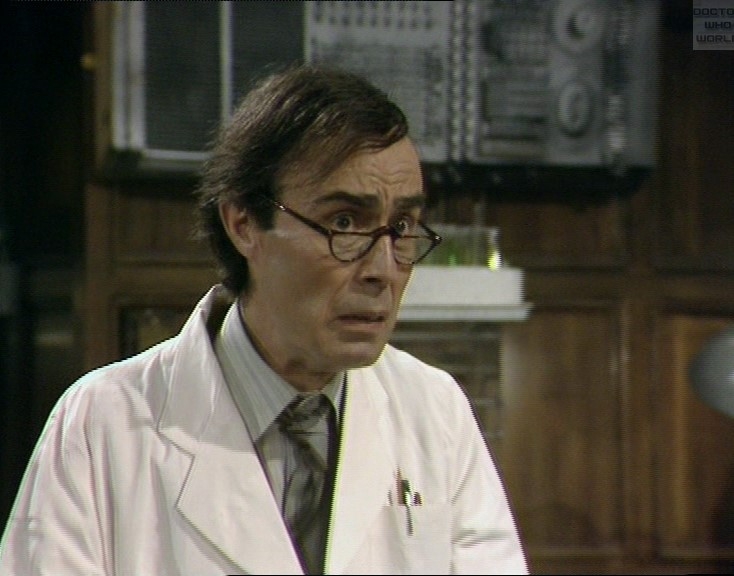
It was reported today that the actor David Graham has died, a couple of months on from his 99th birthday.
He made two appearances in Doctor Who: playing Charlie the Barman in The Gunfighters, and Professor Kerensky in City of Death. However, it will be as one of the original voices of the Daleks that he will be best remembered by fans. 
Beyond Doctor Who, it will be his other voice work on Thunderbirds that will feature prominently in the obituaries. He provided the voices for Parker and Brains amongst others.
Graham joined the cast of The Daleks to provide their distinctive vocals alongside Peter Hawkins. They collaborated throughout the Hartnell era, as well as on the two Peter Cushing Dalek movies, before Graham moved on to other projects. He also provided vocals for the Mechonoids in The Chase.
His final association with the programme came with some new vocals on the recent colourised version of that first Daleks story.
Another popular venture of recent times was the hugely popular children's TV show Peppa Pig in which he voiced Grandpa Pig.
Left very much housebound following a stroke in late 2020, he was able to continue working due to his specialism in voice work, which he could record at home.
RIP.

Thursday, 19 September 2024

Story 297c: Flux - Once, Upon Time


In which the Doctor is forced to improvise to save Yaz and Vinder from being exposed to the full force of Time itself...
They are in the Temple of Atropos on the planet named Time, captured by Swarm and Azure and forced to take the place of two damaged Mouri - beings who help harness and control Time, which is seen as a sentient but chaotic force.
The Doctor saves everyone by throwing them into a time storm, where they can be concealed within their own timelines.
Elsewhere, a young woman named Bel is travelling through the remnants of the universe, attempting to avoid the consequences of the Flux. She records messages to her lover as she goes along. On one world she spots a pair of refugees and witnesses them come under attack by a glowing blue cloud, which destroys them.
Within the time storm, the Doctor sees a Weeping Angel. She finds herself in a darker version of her coat, standing outside the Temple of Atropos. With her are Dan, Yaz and Vinder. They are armed and all seem to know each other well - part of a team. They are about to raid the building.
She realises that she is experiencing a moment from the period for which she has no memories - and the people with her are avatars for other people. At this point in her history she was the "Fugitive" Doctor. Dan is actually Karvanista, proving that they were once partners within the Division.
Their task is the capture the Ravagers - Swarm and Azure - who are besieged within the Temple. This is the older incarnation of Swarm, before his escape from captivity just before the Flux struck.


Dan is back in Liverpool with Diane, but the pair keep flitting through time. He also sees the cloud of blue particles. Only he notices the time jumps, and recalls these incidents from his recent past. Diane suddenly vanishes, to be replaced by the hulking Passenger, who had accompanied Swarm and Azure at the Temple.
Yaz is back in the police force, and fleetingly sees a Weeping Angel. Her colleague transforms into the Doctor, who manages to warn her that she is trying to break into her time stream before vanishing again.
Vinder has been transported back to the time immediately before his demotion and exile to the deep space observation platform. His commanding officer, who appears to him in the form of Yaz, orders him to work with a powerful figure known as the Grand Serpent - a ruthless, manipulative character.
Attending a meeting with him, he realises that the Grand Serpent is advocating the assassination of a client's political rival. When he questions something he says, he suddenly finds himself in disgrace and reassigned to the spacecraft.


Within the time storm, the Doctor is warned by a trio of Mouri that Time is toying with her and her friends.
Dan next finds himself in a series of tunnels, and comes under laser fire. Joseph Williamson is here. Both have to evade the blue particle cloud. He then returns to present day Liverpool, and the Doctor appears and tells him about her hiding him within his time stream. She vanishes again, as she is still dealing with the Mouri.
Bel finds an abandoned Lupari spaceship and uses it to escape the region of space now dominated by the Daleks. The universe has been split between Dalek, Cyberman and Sontaran space since the Flux struck.
The ship comes under attack by Cybermen but she is able to destroy them all.
Yaz is now playing video games with sister Sonya. Their first-person-shooter game suddenly features a Weeping Angel, which emerges from the screen.
The Doctor appears and Yaz tells her that this is not her home. The Angel is corrupting their time streams. The Doctor gets pulled away and Yaz smashes the games console to make the creature vanish.


Back at the Temple, during their Division operation, Swarm and Azure explain that they champion Time in its war against Space. They explain that Passengers are actually living prisons - each can contain thousands of people. However, the Division team have planted one of their own, containing Mouri. They emerge and the Ravagers are captured.
The Doctor next arrives on a space station where she meets a woman named Awsok, who tells her that the Ravagers were released deliberately in order to corrupt Time, whilst the Flux was created to destroy Space.
Before she can discover more, the Doctor finds herself back inside the time storm and the Mouri announce that they are about to return everyone to the present. The Doctor demands more time, as she wishes to learn more of her past, but they decline. Back at the Temple, Swarm and Azure reveal that the blue particle cloud is actually the destructive Time Force. The Doctor and her companions, along with Vinder, escape to the TARDIS.
The Doctor takes him to his home planet. It still exists, but it is now lifeless. He tells them that he now plans to seek out his lover - Bel. The others leave in the TARDIS, where Yaz is shocked to see a Weeping Angel on her mobile phone. 
Dropping it, the creature materialises within the ship and begins to operate the controls...


Once, Upon Time, the third chapter of Flux, was written by Chris Chibnall, and was first broadcast on Sunday 14th November 2021.
Falling between an action-packed Sontaran adventure and an atmospheric Weeping Angel story, this episode was always going to struggle. Indeed, in polls it tended to be the least popular of the six instalments.
Until you work out that everyone has been placed within their time streams, it can be confusing - leaping about as it does. Half way through the overall story, some explanations should start to make themselves known but, apart from the background to the Ravagers, we're still none the wiser.
Williamson's presence in particular remains inexplicable. Not only has he popped up within an alien temple, but there are now laser shots being fired in his tunnels by someone we don't even get to see.
And after the Flux there is now the weird blue cloud to get our heads round.
A serious problem is the addition of even more characters. Chapter 3 of 6 and we now get the Grand Serpent, Bel and Awsok... As Flux develops, it looks increasingly probable that Chibnall was making large parts of it up as he went along. Two of these characters will have some role to play in the final analysis, but Bel really isn't needed at all. Vinder could have been given a quest that did not necessarily mean the inclusion of a whole new character, on top of all the others we've already got. And in hindsight we know we're going to get another, much more, significant character in the next chapter.


Of our new characters, the Grand Serpent is portrayed by Craig Parkinson. He is best known as one of the regulars in police drama Line of Duty, having previously featured in Misfits and Whitechapel, in which he played two roles - modern day versions of the Kray Twins.
Awsok is Barbara Flynn. She starred opposite Peter Davison and David Troughton in the cult drama series A Very Peculiar Practice. Other roles of note include an early Inspector Morse, the Beiderbecke Trilogy with James Bolam, and more recently Beyond Paradise - a spin off from the popular Death in Paradise.
Bel is played by Thaddea Graham, who has appeared opposite Ncuti Gatwa in Sex Education.
We get return appearances by Jo Martin as the Fugitive Doctor, and Bhavnisha Parmar as Yaz's sister Sonya - last seen in Can You Hear Me?
It's a personal annoyance of mine that Chibnall upset a great many fans by introducing the notion that there were other Doctors before Hartnell - hundreds or even thousands of them. So why do we only ever see Doctor Ruth? Here was a perfect opportunity to show another earlier incarnation, but we only ever seem to get her...


Overall, it's only supposed to be a place-holder episode, a sort of catching of the breath between bigger and better chapters, but it would have been nice if it had moved things along a lot further. Nice to see the Cybermen again, even if it's only a cameo appearance.
Things you might like to know:
  • Craig Parkinson is married to Susan Lynch, who appeared in The Ghost Monument as Angstrom.
  • Vinder has heard of TARDISes - further suggesting that this character was replacement for Captain Jack.
  • Masked Ravager Guards were due to have featured in the Temple scenes, and got as far as creature designs being made before being cut.
  • Weeping Angels were featuring in actual console games in 2021, including VR game The Edge of Reality. There was also a game designed for mobile phones called The Lonely Assassins.
  • Jo Martin is credited as "Fugitive Doctor". Until now this had been a term used only by fandom and in certain BBC sanctioned publications, but the programme itself now makes it official.

Tuesday, 17 September 2024

What's Wrong With... Earthshock


The cave with the bomb seems to be in the middle of nowhere, so what geographical relation has it to the forthcoming conference?
Why place the device somewhere accessible, where it might be found and deactivated? Why not simply stick it in a hole in the ground and bury it, or drop it in the ocean?
If it's a planet-destroying bomb, it could have been placed thousands of miles away where there would be less likelihood of security searches.
The conference surely includes lots of different aliens, so why do the troopers have a scanner that can only pick up mammalian lifeforms? It's a conference to establish an alliance against Cybermen, so shouldn't they at least be able to pick them up on their equipment?
What if an enemy wanted to use robots? Oh look - they have used robots.
The sentinels actually draw attention to the bomb, sort of defeating the whole subterfuge thing.

The Cybermen assume that their plans are fool-proof, but surely they understand the concept of "contingency". They are relying entirely on a single bomb, which has already been disturbed by cavers, so why didn't they think of having a second, or even third, device elsewhere.
The fact that they have placed sentinels shows that they expect potential tampering.
After all, in Revenge of the Cybermen they knew that one bomb would be enough to destroy Voga, but still had three of them carried into the heart of the asteroid.
They are also quick enough at coming up with a 'Plan B' when the bomb is deactivated. Why not have 'Plan B' in place from the start?

Radio signals travel at 186,410 miles per second in space - so why does it take a whole minute for the Cyber-signal to get from the freighter to the bomb? Just how far out is this vessel?
Why did the Cybermen kill some of the crew if they wanted to keep a low profile of the freighter? They can't all have stumbled into their secret lair.
Scott is a member of Earth's security forces - so why did the Doctor not call on him the minute he and Adric were captured. Why leave him in the TARDIS in the first place?
The Doctor is a suspected murderer, yet Briggs allows him and Adric to remain on the bridge, unsecured. She and Berger simply go about their business with their backs to the pair of potential killers.

It isn't made very clear why the Cyber-Leader leaves a significant number of his troops on the crashing freighter - nor why they suddenly activate remotely. Where do they go to? Only a single damaged Cyberman makes it to the bridge to stop Adric's meddling.
How do the first lot of Cybermen get off the ship? The Leader takes to the TARDIS, but where does his army go? How many escape pods does this sparsely-crewed freighter need? It is logical that the crew might try to escape, so why leave them a pod anyway?
Why did the Cybermen capture Tegan, when they've been killing everyone else? Why, in general, do monsters always seem to know which members of the cast are the regulars?

This one generated heated debate in the pages of DWM: how can the Cybermen have footage from Revenge of the Cybermen when it takes place far in their future? How can they have footage from The Tenth Planet when not only did every Cyberman perish, but so did their entire planet? Uploaded to some computer archive just doesn't wash.

Stuff everyone notices:
One of the troopers turns to look back, and fails to spot the obvious moving shadow of an android on the cavern wall, despite staring right at it.
A couple of Cybermen seem to be having a very casual chat in one scene.
A member of the production team can be seen lurking under a stairway, as spotted by Peter Davison when watching the DVD with the contrast turned up.
A female trooper is grabbed by a Cybermen just as she is about to walk into the TARDIS, yet is seen entering unharmed seconds later.
You can see David Banks' battery pack sliding down his chin, before the clear chin piece suddenly becomes opaque - and earlier his voice modulator picks up Davison's voice briefly.
Earth didn't look like it does today 65,000,000 years ago - and wouldn't have been in the same location in space back then for the freighter to crash into it.
Adric miraculously intuits that the console is about to explode several seconds before it happens. Mr Waterhouse rather spoils the moment.
And can anyone really take seriously the idea of Beryl Reid as a tough space captain?

Sunday, 15 September 2024

Episode 133: The Tenth Planet (3)


Synopsis:
As General Cutler absorbs the news that his son is now in orbit in the Zeus 5 capsule, a radar technician announces that a huge fleet of Cyberman spaceships is approaching the Earth...
Cutler orders scientist Dyson to contact his son in the Zeus 5, just as the Doctor suddenly collapses. Ben and Polly are told to take him to the crew room.
Terry Cutler is notified that he will no longer be rendezvousing with Zeus 4, and is advised to keep an eye out for the Cyberman fleet which should be in a lower orbit. Cutler assures him that he will bring him down safely - no matter the cost.
Ben and Polly return to the tracking room to hear that the General plans to destroy Mondas. Snowcap Base is one of the sites where the powerful Z-Bomb is housed.
Barclay is horrified as this weapon could damage the Earth with radiation due to the proximity of the two worlds. Cutler admits the risk, but dismisses it as potentially affecting only the side of the Earth facing Mondas. 
He contacts Wigner in Geneva and seeks permission to use the Z-Bomb, but this is explicitly refused due to the dangers mentioned by Barclay. However, the bureaucrat does allow Cutler to use any means necessary to defend against the Cybermen - little realising that the General will twist this to mean deployment of the Z-Bomb. Barclay, Ben and Polly realise that the base commander is becoming mentally unbalanced, due to his obsession with saving his son.
When it becomes clear that he intends to launch the weapon, as Mondas directly threatens the Earth, Ben tries to tell him that the Doctor thought otherwise. He claimed that Mondas was more at risk from Earth than the other way round, due to its energy-draining. He had advised patience.
Cutler refuses to heed this advice and begins the launch preparations.
Polly is asked by Ben to start working on Barclay, to get him on their side.
Sure enough, he is so opposed to the Z-Bomb use that he agrees to help them sabotage the launch.
The radar technician reports another landing nearby of a Cyberman spaceship. The three weapons earlier captured from Krail and his fellow Cybermen are taken outside by a squad of soldiers who conceal themselves in the snow. As a group of Cybermen emerge out of the blizzard, they are ambushed with their own weaponry and most are destroyed, with the survivors retreating back to their craft.
Barclay has sent Ben through a ventilation shaft from the crew room to the missile silo, with instructions on how to sabotage the weapon in such a way as it will take a long time to trace and put right.
Cutler becomes suspicious and goes to the silo room in time to catch Ben tampering with the device. He pushes him and he falls from a gantry, leaving him stunned.
He is brought to the tracking room as the missile countdown begins - with the General threatening to kill him and Barclay if anything goes wrong.
Polly desperately asks Ben if he succeeded in his mission, but he is still confused from his injury. He simply cannot recall. 
The countdown reaches zero and the rockets fire...

Data:
Written by Kit Pedler & Gerry Davis
Recorded: Saturday 1st October 1966 - Riverside Studio 1
First broadcast: 5:50pm, Saturday 22nd October 1966
Ratings: 7.6 million / AI 48
Designer: Peter Kindred
Director: Derek Martinus
Additional cast: Callen Angelo (Terry Cutler), Christopher Dunham (R/T technician)


Critique:
After completing his scripts for the first two episodes, Kit Pedler was taken seriously ill in the summer of 1966 - necessitating surgery and a hospital stay. Gerry Davis was very busy at the time working on both The Smugglers and the story which would launch the new Doctor - then known as "The Destiny of Doctor Who". He had already been guiding Pedler through his contributions, and so it was decided that he would complete Hartnell's final adventure himself - for which he had to get special permission, being the series' Story Editor. He would be entitled to split the fee with Pedler as well as be given on-screen credit for his work. 
This was discussed with Pedler, who agreed to the arrangement. He was able to inform Davis of his ideas for the remaining two instalments, though it was up to the Story Editor how much of this he could use.
It was also agreed at this time that Pedler and Davis would enjoy shared copyright of the Cybermen.

During the summer break Hartnell had suffered bouts of ill health. On completing recording of the second episode of his final story, the star was struck down by bronchitis. His doctor prescribed a week's rest along with his antibiotics, and so he would be unable to attend rehearsals for the next instalment which commenced two days later. The Doctor would have to be written out of the episode.
Having been forced to pen the episode himself, it now fell to Davis to make the necessary adaptations to cover Hartnell's absence.
The Doctor simply falls unconscious at the beginning of the episode, and his exposition is split between Ben and Barclay. It is noticeable that Ben speaks of things which the Doctor is supposed to have said - such as the danger to Mondas and the call for restraint - when he has never been heard to say any such thing, and there hasn't even been any opportunity to do so off-screen.
The consequences of using the Z-Bomb against Mondas and other scientific dialogue was given to Barclay.

As with the third episode of The Dalek Invasion of Earth, when Hartnell had been forced to miss a week through injury, a double would be employed, seen only from the back - their sole job being to fall over in the first shot. They would then remain unconscious off camera for the remainder of the episode.
Having already doubled for Hartnell in Cornwall for The Smugglers, and for the opening South Pole scenes at Ealing, Gordon Craig was hired to feature briefly at the start of the episode, collapsing in a faint. The Doctor is then taken to the crew room and spends the rest of the instalment under a blanket on a bunk bed.
As well as the dialogue changes, the initial draft of the third episode did not include Ben in the tracking room at the conclusion. The Doctor was to have felt ill throughout, and not played a significant role anyway. He was to have rested in the crew room for much of the instalment, only being brought back to the tracking room for the cliff-hanger.


The Cybermen did not feature at Riverside on the third studio day. The creatures appear in one sequence only, which was filmed at Ealing on Thursday 1st September.
This had been the first time that the actors had worked in the costumes, and many of the problems in doing so only became apparent this day.
Some fainted under the hot studio lights, and everyone needed help getting back up after falling in the ambush. As previously mentioned, the lamp on the top of the head was fitted with a bulb which was supposed to illuminate - but it blew on being switched on and the idea was quickly dropped.
Parts of the costume came loose, requiring running repairs from Sandra Reid and her assistant.
A BBC photographer was present on the day to record the activity. It was on this occasion that all of the group shots of the Cybermen in the snow were taken. The chap on the right, above, wearing glasses, is director Derek Martinus.
The three actors who would be playing the Cybermen in studio were amongst the group - Reg Whitehead, Harry Brooks and Gregg Palmer - and joining them for filming only were John Slater, Bruce Wells, John Haines, and John Knott.
Model filming depicting the raising of the Z-Bomb rocket took place two days earlier, Tuesday 30th August, also on Ealing's Stage 3.

During the rehearsal period, Martinus wrote to Hartnell wishing him a speedy recovery and informing him of how they had covered his absence.
One side effect of the changes made by Davis was the removal of a new scene for Glenn Beck as the TV News announcer. Instead, he and Roy Skelton - not needed for Cyber-voices - provided background vocals for the various intercom messages throughout the episode.
Skelton also provided the Z-Bomb countdown.
The studio day did not get off to a good start, as Martinus was angry with the state of the tracking room set. It had been transported to Alexandra Palace for storage as there was insufficient room at Riverside, and had been damaged at some point in transit.
Davis' name was misspelt in the opening credits.
The Zeus 4 set was reused as the Zeus 5 one. Callen Angelo, playing Cutler's astronaut son, was only ever seen in close-up on monitors to help disguise this.
The main new set was the multi-level rocket silo room, which included the wall-mounted grill which Ben had to crawl through.
Stuntman Peter Pocock doubled for Michael Craze in the sequence where Ben is knocked off the gantry by the General.
Recording breaks were mainly to allow cast members to move between the tracking room and silo sets, and to allow Craze to move along the ventilation shaft in close-ups.
Stock footage of rocket jets firing was used for the final scene, and countdown numerals were superimposed over the Snowcap crewmembers.

The Tenth Planet very much provides the blueprint for the "base under siege" story structure, which will come to prominence in the Troughton era of the programme. We have the small group of people - generally scientists rather than trained soldiers, though there may be some of those to act as "red shirts". They are housed in a claustrophobic location, situated in a hostile environment - making simple escape impossible. To add to the drama, the person in command of this location is wholly unsuited to the role, suffering from some mental health issue - triggered by the alien threat or an existing condition which the situation exacerbates.
Cutler is clearly a hard taskmaster whom it is difficult to work with, and the nature of the remote and confined location is specifically mentioned in the first episode as the Sergeant explains how no-one works here for more than a few months at a time.
We've seen how ruthless the General can be when dealing with the Cybermen, but he totally flips when his son comes under threat. He is quite prepared to ignore a direct order - twisting Wigner's "any means necessary" to include the very thing he's been specifically told not to use. His planned actions can destroy a whole half of the earth at the very least, but he's single-mindedly fixated on saving his son. This can't all have come out of nowhere. Clearly Cutler must have already been suffering some kind of obsessive-compulsive behaviours prior to this, which his superiors really ought to have picked up on. People working in remote hostile environments would be getting psychological check-ups on a regular basis. 
Even if ISC were unaware of any of this, they ought to have known that sending into danger the son of the man responsible for dealing directly with an alien invasion would be a distraction at the very least, and the trigger for a complete mental breakdown at worst.
It may be a Cyberman story, but with this third episode Gerry Davis is more interested in telling a human story.

Trivia:
  • The ratings see yet another significant increase of more than one million on the previous week. The appreciation figure remains constant and under 50, however.
  • Bernard Hepton, who would go on to find fame in Colditz and Secret Army, was originally considered for the role of Dyson. When rewrites saw the part diminished, he was no longer interested.
  • Cutler's son is named Terry in the credits and in various production documents - but it is never mentioned in dialogue.
  • The script specified that Wigner should speak to one of his underlings in Greek, but actor Steve Plytas opted to use French instead.
  • The forthcoming change in lead actor was reported in the US entertainment trade paper Variety on Wednesday 28th September. The piece mentioned how the Doctor's personality would change along with his appearance, and pointed out how successful the series had been so far in foreign sales.
  • Michael Craze could be seen in the Wednesday Play series in the run-up to broadcast - in a comedy called A Piece of Resistance. This was actually a repeat, however, as it had debuted on BBC 2 on Boxing Day, 1965.
  • The layout of the base has to be questioned, as it appears that there is a ventilation shaft leading directly from the crew room to the rocket silo - suggesting that anyone lying in bed during a launch would most likely be cremated...
Friday, 13 September 2024

The Art of... The Tenth Planet


Gerry Davis was the author for the novelisation of The Tenth Planet, having been its original co-writer. He had already penned the first of the Cybermen novelisations, based on The Moonbase.
Whilst Doctor Who and the Cybermen had been a fairly straightforward adaptation, for this book Davis elected to make a few changes.
He moved the date to 2000AD, and instead of an old Western it is a James Bond movie which Ben sees. The description of Roger Moore fighting in a kung-fu school lets us know that this is specifically 1974's The Man With The Golden Gun. He also changes the regeneration scene - with the Doctor taking to a bed-like device covered with a canopy - and adds the same "Origins of the Cybermen" prologue from his earlier book.
The cover is by Chris Achilleos, and actually featured in the first Doctor Who Monster Book some three months before the novel's release date.
The book was published in 1976. A reprint in 1978 used a blue logo, and amended the background to a simpler purple block, omitting the rays of light emanating from Mondas at the top of the artwork.
This was the first of the Target books not to have the Doctor's image on the cover. He is relegated to the back, as this was part of a short run of books to have additional artwork on the reverse.

The 2012 reissue - the one with the foreword by Tom MacRae - did away with a coloured background altogether, placing the Cybermen and planets against a plain white backing.
The book was reprinted again in 1993, this time with totally new artwork from Alister Pearson, and using the Oliver Elmes McCoy logo:


An image of Hartnell, based on a photo from The Celestial Toymaker, is flanked by a mirrored full length image of a Cyberman, with a portrait shot above the Doctor's head (taken from a telesnap from the cliff-hanger to the first episode).


The Tenth Planet was not released in VHS form until 2000, by which time they were using photomontage covers. Once again The Celestial Toymaker provides the Hartnell portrait, and the profile shot as used on the Achilleos cover is coupled with the full length photograph as used by Pearson to depict the Cybermen.
We have a wintry landscape, but whoever put the cover together seems to think that they have trees at the South Pole...


A video release had been planned earlier, which would have featured Michael Craze describing the events of the missing episode. This material was recorded - at the Museum of the Moving Image Behind the Sofa exhibition - but the release was then shelved when a rumour began to do the rounds that Part 4 was about to be returned to the archives.
Andrew Skilleter produced the above artwork for the abortive VHS. The Doctor image is taken from a photograph from The Web Planet, wearing his Atmospheric Density Jacket.


The story was released onto DVD, quite late in the range, in October 2013. The cover art comes courtesy of Lee Binding.
It was made available first as part of the "Regenerations" box-set, which included the surviving regeneration stories for every Doctor up to Tennant's first stint. The full length photo of a Cyberman is used once again, along with a mix from the Ealing filming.


The Region 1 release once again allows more of Binding's artwork (above) to be seen - whereas the Region 2 version is very cramped thanks to the roundel design which takes up the top third, and the various graphics.


Being only partially complete, The Tenth Planet had its soundtrack released as part of the BBC Radio Collection in January 2006. The linking narration was by Anneke Wills.
An overly cluttered photomontage cover includes images from other stories - Polly from The War Machines and the Doctor and Ben from The Smugglers. Our old friend the full length shot of the Cyberman in the snow, is there - with a weird tornado emanating from his gun - as is the profile image, top left. The cover is then padded out with more Cybermen from the Ealing filming. Cutler and the astronauts are somehow also squeezed in. Sometimes less really is more...

The novelisation was released as an audiobook in 2018. The reader is Anneke Wills again, and Nick Briggs provides the vocals for the Cybermen. (Personally, I prefer to hear the voices of the original TV versions of Daleks, Cybermen and Master in my head, so don't hold with this sort of over-writing of history).
For the cover, they have decided to use the later 1978 reprint version, with the solid purple backdrop at the top of the image.


Finally, the music from the B&W era has been released in different formats over the years, especially as Space Adventures Vols 1 & 2. In December 2002 a compilation of just over 13 minutes of the stock music from The Tenth Planet was released on the Ochre Records label. One of the group shots from Ealing provides the cover image.

Thursday, 12 September 2024

Inspirations: The Angels Take Manhattan


The title probably derives from the Rogers & Hart song Manhattan, written in 1925. The original lyric read "We'll have Manhattan, the Bronx and Staten Island too..." but this was later amended to "I'll take Manhattan..." by some singers, such as Sinatra, and has sort of stuck.
To "take" a city means simply to become a success there - e.g. to become the most popular business. To take Broadway, for instance, meant to become its biggest star or to produce the top box office hit.
In 1987 Leonard Cohen released the song First We Take Manhattan, and the same year saw a soapy mini-series called I'll Take Manhattan.
The 1980's saw movies The Muppets Take Manhattan, and Friday 13th VIII: Jason Takes Manhattan, so it was definitely a relatively well known phrase by then.
Also, in 2011, Karen Gillan had starred as model Jean Shrimpton in the BBC4 biographical drama We'll Take Manhattan.

The episode was originally going to be the last of four new stories which would comprise the first half of Series 7, and see out Amy and Rory as companions.
Gillan was the first to inform Moffat that she wished to leave, but it transpired that Arthur Darvill was thinking along the same lines. They met with Moffat and planned when best to organise their final story. They both wished to leave in a manner which would preclude them coming back again later - so a clean break. neither wanted to come back, even in a cameo appearance (though Gillan did eventually record one scene for Matt Smith's final story). The writer had a year to plan their departure.
Inextricably linked to the Ponds, the story would definitely involve River Song.
Moffat later claimed that he rewrote the ending 20 times, unsure whether or not to actually kill the couple off.

One of his starting points was J M Barrie's Peter Pan - in that whilst Peter remained youthful, the people he knew would grew up. This had been addressed before by RTD in episodes such as School Reunion, when the Doctor had to explain what stopped him having a relationship with a human being.
The New York setting was inspired by a holiday there, during which Moffat and his family became snowbound. He and the regulars had enjoyed the city on promotional visits, and Darvill would later enjoy a successful Broadway stint.
The city was very much geared up to support filming for TV and cinema, and the production team were helped out by the US line producer who had assisted with the Utah shoot for Series 6.
Keen to use the Weeping Angels again in a big story, Moffat saw photographs of the Bethesda Fountain in Central park, which included cherubs - baby angels.
The fountain would feature in the episode itself, instrumental in Rory's temporal abduction to 1938.
(It also plays an iconic role in the 2003 HBO adaptation of Angels in America, based on the play by Tony Kushner).

The 1930's setting for the bulk of the story came from a love of film noir, with River's alter ego, Melody Malone, inspired by the "hard-boiled" private detective genre. 
Grayle was named after a character in Raymond Chandler's Farewell My Lovely (1940). He was inspired by Sydney Greenstreet - the "Fat Man" in The Maltese Falcon (1941).
Sam Garner's name hints at Dashiell Hammett's Sam Spade (played by Bogart in the above film), and actor James Garner (famed for portraying down-at-heel PI Jim Rockford).
Battery Park was an obvious choice for the location of the apartment block Winter Quay - as the building was being used by the Angels as a battery / storage unit for the potential energy of its captives.
In his script, Moffat stated that the gothic building should be like something out of Charles Addams (creator of The Addams Family), crossed with something from a David Lynch movie.
Despite being made of metal rather than stone, the Statue of Liberty is the most famous statue in the city - so it was inevitable that it would become a Weeping Angel.
It doesn't actually do anything, and the idea that it can cross the city seemingly unnoticed is daft, so its inclusion was purely to provide some iconic imagery for the episode.
The ancient Chinese sequence is set in the year 221 BC - a Sherlock Holmes in-joke. And the first chapter of the Melody Malone novel is "The Dying Detective" - another Holmes reference.
Next time: Let it snow, let it snow, let it snow...

Tuesday, 10 September 2024

N is for... Nyder


Commander of the security force operating out of the special Military Elite bunker close to the Kaled city on Skaro. This was presided over by Davros, who had assembled a group of scientists to work on ways to win their millennia-old war with the Thals. Over time, Davros had come more and more to concentrate on the eventual genetic evolution of his people, recognising the damage done from the centuries of atomic and chemical warfare. This had led him to develop the Daleks.
Nyder was fiercely loyal to him and acted as his personal assistant and confidante. Only he was party to Davros' plans, and knew the combination to his wall-safe.
Part of his role was to monitor the scientific and security staff of the bunker, to root out dissent and disloyalty. To achieve this he might pretend to be in league with potential traitors, until he had proof and they could be safely rounded up and disposed of.
He exercised authority over the conventional Kaled military forces.
When the Dalek project came under threat from his own government, Nyder was prepared to go along with Davros in selling out the Kaleds to their enemies - accompanying the scientist to a secret meeting with the leadership in the Thal city. Here, Nyder passed on the formula for a solution which would weaken the Kaled city's protective dome. Its destruction enabled Davros to feign fury and vow vengeance - and he sent his new Dalek force into the Thal city to wipe out its inhabitants.
The bunker staff began to turn against Davros in greater numbers, and Nyder advised either flight or fight against their opponents. The scientist advised caution, however, as he planned to identify those completely loyal to him whilst the Daleks assembled to attack and kill the rebels.
They carried out this order - but then proceeded to shoot down the rest, claiming they needed no help from inferior beings. They activated their automated production line and when Davros ordered Nyder to halt it, the Daleks exterminated him. They then turned on their creator...


Played by: Peter Miles. Appearances: Genesis of the Daleks (1975).
  • Third and final appearance by Miles in the series, and the one he is best remembered for. He first featured as Dr Lawrence in The Silurians, then returned to play Professor Whitaker in Invasion of the Dinosaurs.
  • Miles also portrayed Nyder on audio and in an amateur stage play - The Trial of Davros.
  • For the first recording block, Miles wore an Iron Cross with his uniform. Despite the parallels to the Nazis being obvious to all, the director thought it lacking in subtlety and asked for it to be discarded. It can be seen being worn in the earlier episodes of the story.
  • Miles can also be heard, as a different character, in the Pertwee audio Paradise of Death, and appeared in two episodes of the first season of Blake's 7.
  • Outside of acting, Miles' first love was jazz music and he performed up until his death in February 2018.
  • A close friend of singer Dusty Springfield from childhood, he played guitar on her first ever recording.